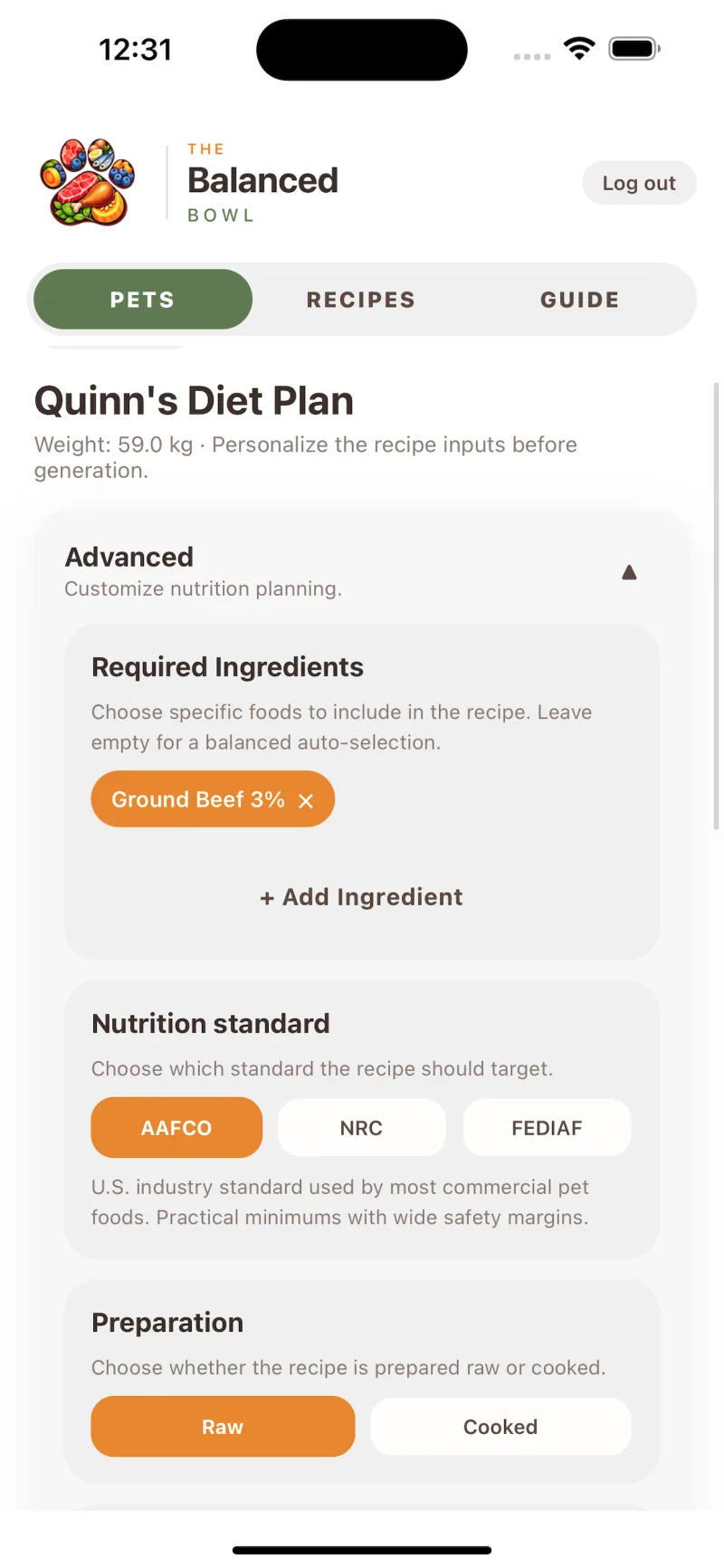
When you see "complete and balanced" on a dog food label, it’s referencing a specific standard. In practice, most diets in the U.S. rely on AAFCO nutrient profiles or feeding trials, while European formulas typically align with FEDIAF guidelines. Under the hood, much of this science is grounded in the NRC’s nutrient requirement research.
NRC: the scientific foundation
The National Research Council (NRC) publishes detailed nutrient requirements for dogs based on research. These reports are not labels or regulations, but they are the scientific backbone that informs many industry standards.
- Pros: deep scientific detail and nutrient requirements.
- Cons: not a consumer‑facing compliance standard.
AAFCO: the U.S. labeling standard
In the U.S., "complete and balanced" generally means a diet meets AAFCO nutrient profiles or has passed AAFCO feeding trials. AAFCO also defines life‑stage categories like growth (including reproduction) and adult maintenance.
- Pros: clear label language and life‑stage categories.
- Cons: not fully individualized; profiles target broad populations.
FEDIAF: the European guide
The European Pet Food Industry Federation (FEDIAF) publishes nutritional guidelines that pet food brands use for formulation and compliance in Europe. FEDIAF updates these guidelines periodically as research evolves.
- Pros: comprehensive guideline set with regular updates.
- Cons: still a generalized standard, not a personalized diet plan.
What this means for your dog
Standards are a strong baseline, but dogs are individuals. Age, activity, and medical needs can shift ideal calorie and nutrient levels. The best approach is to use a standard as the floor, then personalize as needed with professional guidance.