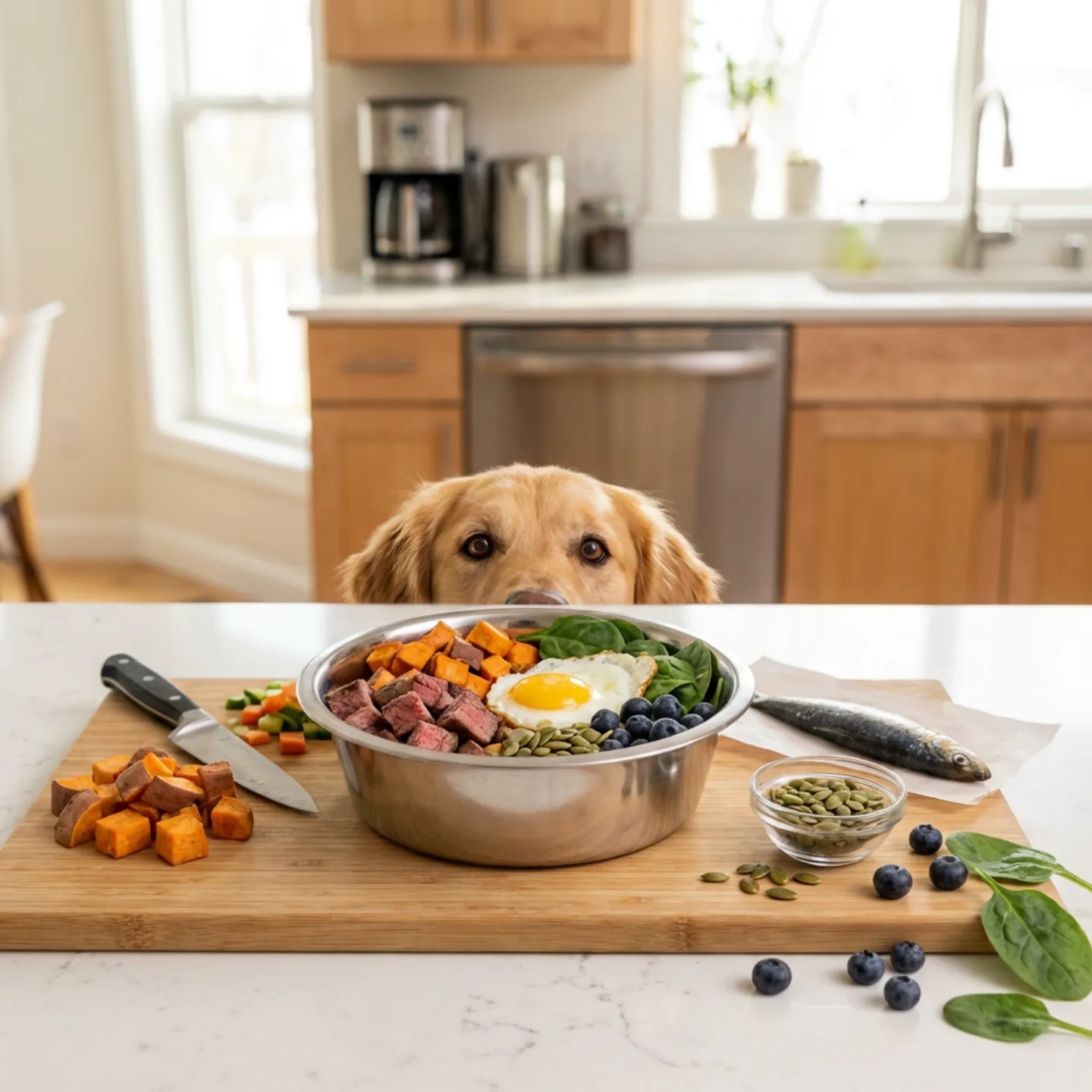
Raw feeding has become one of the most popular approaches in homemade dog nutrition, and for good reason. Many dog owners report improvements in coat quality, energy levels, and overall enthusiasm at mealtime after switching to raw. Like any feeding approach, it comes with considerations worth understanding so you can make the best choice for your household.
Why owners love raw feeding
- Ingredient transparency: You know exactly what goes into every meal — no mystery fillers, artificial preservatives, or processing byproducts.
- Whole, minimally processed nutrition: Raw diets preserve heat-sensitive nutrients like certain enzymes and vitamins that can be reduced during cooking.
- Improved palatability: Many picky eaters thrive on raw food, and owners often see increased excitement at mealtimes.
- Coat and skin improvements: Higher bioavailable fats and omega fatty acids in raw diets are frequently linked to shinier coats and healthier skin.
- Smaller, firmer stools: A common observation among raw feeders, likely due to higher digestibility and less filler.
Considerations to keep in mind
Raw feeding is safe and rewarding when done thoughtfully. Here are the key things to be aware of:
- Nutritional balance is essential: A raw diet needs to be complete and balanced, just like any other diet. Working with a nutrient-aware recipe (or a tool like The Balanced Bowl) helps ensure your dog gets everything they need.
- Food safety practices matter: Raw meat requires the same safe handling you'd use when preparing your own meals — clean surfaces, proper storage, and hand washing.
- Household awareness: Homes with very young children, elderly family members, or immunocompromised individuals should take extra care with food handling hygiene.
- Sourcing quality ingredients: Fresh, human-grade ingredients from trusted sources make a meaningful difference in both safety and nutrition.
Safe handling tips
- Store raw ingredients at proper temperatures and thaw in the refrigerator.
- Use dedicated prep surfaces and utensils for your dog's meals.
- Wash hands, bowls, and surfaces thoroughly after preparation.
- Serve meals promptly and refrigerate any leftovers within 30 minutes.
- Consider pathogen-reduction methods like HPP (high-pressure processing) for added peace of mind.
Is raw right for your dog?
Raw feeding works well for many dogs and households. The key to success is ensuring nutritional completeness, practicing good food safety, and monitoring your dog's health over time. Whether you go fully raw, partially raw, or lightly cooked, the most important thing is feeding a balanced diet made with quality ingredients.
If you're new to raw feeding, consider consulting with a veterinarian or veterinary nutritionist to build confidence in your approach.